Anaesthesia & Pain Management
Information on anaesthesia options, comfort measures, and pain control before and after your procedure.
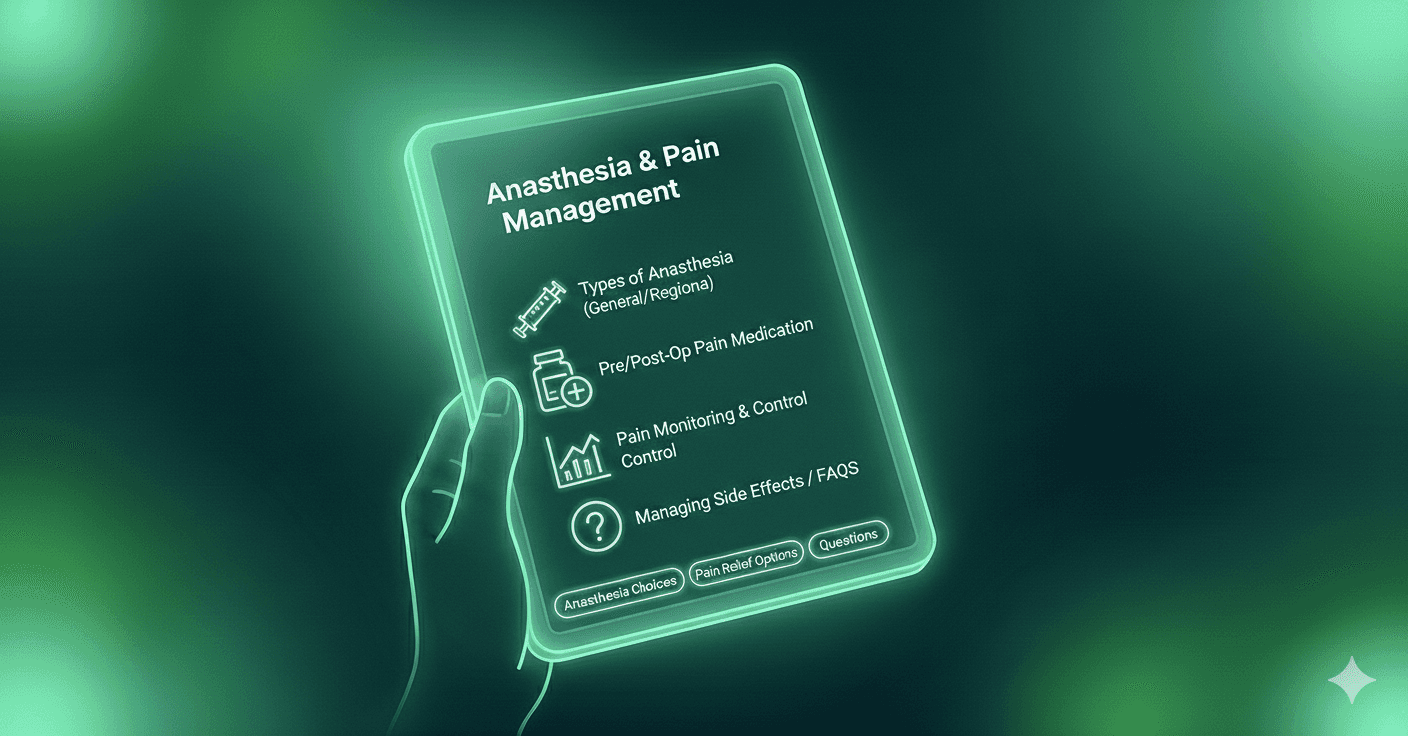
Introduction
Anaesthesia and pain management are key parts of safe and comfortable urological care. The aim is to ensure you are relaxed during the procedure and recover with minimal discomfort afterwards. The anaesthetic plan is tailored to the type of procedure and your overall health.
Types of Anaesthesia Used in Urology
Most urological procedures are performed under general anaesthesia, allowing you to sleep through the operation. In selected cases, regional or local anaesthesia may be used, sometimes with sedation, depending on the procedure and your medical background. The anaesthetist will discuss the most appropriate option with you in advance.
How Comfort and Safety Are Managed
Your comfort and safety are monitored continuously throughout the procedure. Anaesthetists and recovery staff use modern monitoring, medications, and techniques to maintain stable breathing, blood pressure, and comfort. Any concerns or previous reactions to anaesthesia should be discussed beforehand so adjustments can be made.
Pain Control After Procedures
Most patients experience mild to moderate discomfort rather than severe pain. Pain is managed using a combination of medications, such as anti-inflammatory drugs and simple pain relief. Clear instructions are provided on how and when to take these at home. Stronger pain relief is used only when necessary and reviewed regularly.
Nausea, Recovery, and Common Concerns
Post-operative nausea is uncommon but can occur. The risk is assessed in advance, and preventative medications are used when needed. Drowsiness, a dry mouth, or mild discomfort are common during early recovery and usually settle within a short time. You will be advised when it is safe to eat, drink, and resume normal activities.
Footer Notes
Every patient responds differently to anaesthesia and pain medication. If you have ongoing discomfort, unexpected symptoms, or concerns after discharge, contact your care team for advice rather than waiting for your next appointment.
We’re Here to Help
Get clear guidance and support from Dr Philip’s team.
Experienced clinical team
Patient-centred approach
Clear next steps
[Guidance & Tips}
Explore Guidance and Tips
Preparing for your consultation
What to bring, how to prepare your questions, and what to expect during your appointment — so your consultation is focused and productive.
Read More
Understanding Investigations & Tests
Simple explanations of common urological tests and scans, why they are needed, and how results help guide your care.
Read More
Preparing for Surgery & Procedures
Clear guidance on what happens before, during, and after procedures — helping you feel informed, prepared, and reassured.
Read More