Preparing for your consultation
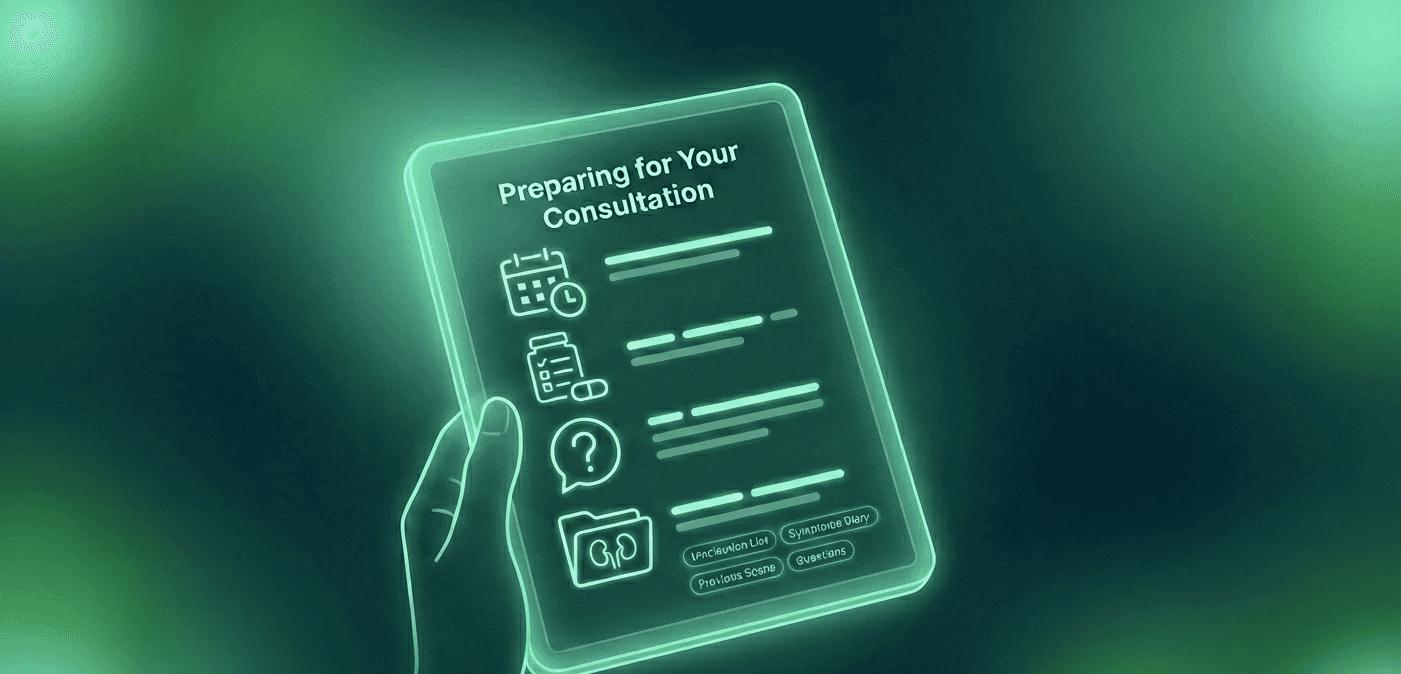
What to bring, how to prepare your questions, and what to expect during your appointment — so your consultation is focused and productive.
Introduction
Coming to see a urologist can feel uncertain, especially if you are dealing with symptoms, test results, or decisions about treatment. A consultation is a conversation — its purpose is to understand your concerns, review available information, and decide on the most appropriate next steps. Being prepared helps you get the most value from this time and reduces unnecessary stress.
What to Bring to Your Appointment
Bringing relevant information helps make the consultation more focused and avoids unnecessary delays. Where possible, please bring:
Recent reports, scans, or test results (blood tests, urine tests, imaging)
A list of current medications, including supplements
Details of any previous urological procedures or hospital admissions
A GP referral letter, if you have one
Insurance details or identification, if applicable
If you do not have everything listed, do not worry — the consultation can still go ahead.
How to Prepare Your Questions
It is common to forget important points once the consultation begins. Preparing in advance can help:
Note your main symptoms and when they started
Think about how these symptoms affect your daily life
Write down specific concerns or worries
List questions about diagnosis, investigations, or treatment options
If seeking a second opinion, note what you would like reviewed or clarified
Bring a family member or friend if you feel it would help you remember information
Being open and honest about symptoms, even if they feel awkward to discuss, is important.
What to Expect During the Consultation
Your consultation will involve a detailed discussion of your symptoms and medical history, followed by a focused examination if needed. Existing reports and scans will be reviewed, and further tests may be suggested to clarify the diagnosis. You will be guided through possible causes, options for management, and the recommended next steps. Time is set aside for questions, and decisions are made with your understanding and agreement.
New vs Follow-Up Appointments
A new appointment usually focuses on understanding your symptoms, reviewing available information, and planning investigations or treatment.
A follow-up appointment is more targeted and may involve reviewing test results, assessing response to treatment, or deciding on further steps.
Both appointments are important, and the approach will be adjusted based on where you are in your care pathway.
Footer Notes
Not all investigations or treatment decisions are made at the first visit. Some conditions require staged assessment or additional information before a clear plan is formed. If something is unclear at any point, ask — no question is unnecessary. The goal of the consultation is clarity, reassurance, and a shared understanding of the next steps.
We’re Here to Help
Get clear guidance and support from Dr Philip’s team.
Experienced clinical team
Patient-centred approach
Clear next steps
[Guidance & Tips}
Explore Guidance and Tips
Preparing for your consultation
What to bring, how to prepare your questions, and what to expect during your appointment — so your consultation is focused and productive.
Read More
Understanding Investigations & Tests
Simple explanations of common urological tests and scans, why they are needed, and how results help guide your care.
Read More
Preparing for Surgery & Procedures
Clear guidance on what happens before, during, and after procedures — helping you feel informed, prepared, and reassured.
Read More