Understanding Investigations & Tests
Simple explanations of common urological tests and scans, why they are needed, and how results help guide your care.
Introduction
Investigations and tests are an important part of understanding urological symptoms and deciding on the most appropriate care. They help clarify the cause of symptoms, rule out serious conditions, and guide treatment decisions. Tests are recommended only when they are likely to add useful information to your care.
Common Urology Investigations Explained Simply
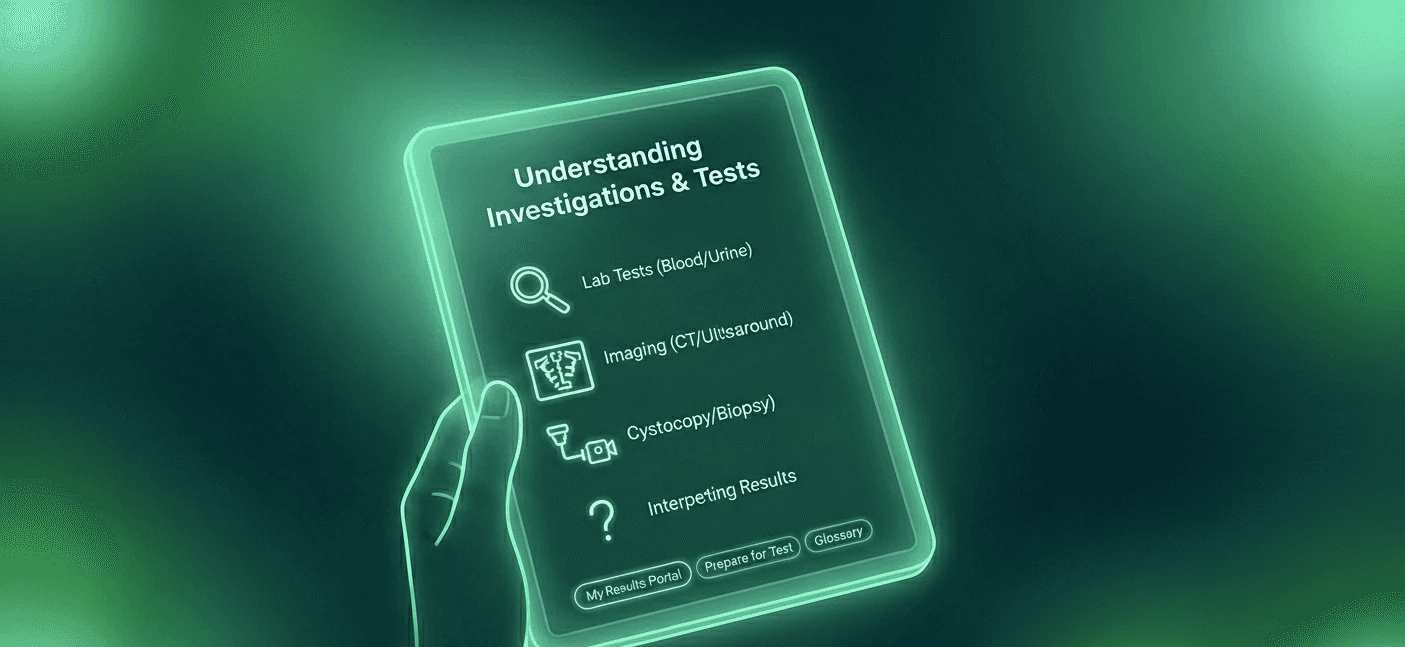
Urological investigations vary depending on your symptoms and history. Common tests include:
Blood tests – to assess kidney function, infection, or specific markers
Urine tests – to check for infection, blood, or other abnormalities
Scans – such as ultrasound, CT, or MRI to visualise the kidneys, bladder, and urinary tract
Endoscopic tests (scopes) – small cameras used to examine the bladder or urinary tract directly
Each test provides different information and is chosen carefully based on clinical need.
Why Tests Are Recommended
Tests are advised to confirm a suspected diagnosis, assess severity, or plan treatment safely. In some cases, they help rule out serious conditions and provide reassurance. Not every symptom requires extensive testing, and unnecessary investigations are avoided wherever possible.
What Happens Before and After Tests
Before most tests, little or no preparation is needed, although some scans or procedures may require fasting or specific instructions, which will be explained clearly in advance. After the test, you can usually return to normal activities unless advised otherwise. Some procedures may cause mild, short-term discomfort, which typically settles quickly.
When and How Results Are Discussed
Results are reviewed once all relevant information is available. Some results may be discussed on the same day, while others are reviewed at a follow-up appointment or communicated through your care team. You will be informed of what the results mean and how they influence the next steps in your care.
Footer Notes
Not all tests provide immediate answers, and some findings may need to be interpreted alongside other results or symptoms. If you are unsure why a test has been recommended or what a result means, ask for clarification. Understanding the purpose of investigations is an important part of shared decision-making.
We’re Here to Help
Get clear guidance and support from Dr Philip’s team.
Experienced clinical team
Patient-centred approach
Clear next steps
[Guidance & Tips}
Explore Guidance and Tips
Preparing for your consultation
What to bring, how to prepare your questions, and what to expect during your appointment — so your consultation is focused and productive.
Read More
Understanding Investigations & Tests
Simple explanations of common urological tests and scans, why they are needed, and how results help guide your care.
Read More
Preparing for Surgery & Procedures
Clear guidance on what happens before, during, and after procedures — helping you feel informed, prepared, and reassured.
Read More