General Urology Operations
A range of endoscopic and surgical procedures to treat prostate, bladder, urethral, and scrotal conditions.
General Urology Operations
A range of endoscopic and surgical procedures to treat prostate, bladder, urethral, and scrotal conditions.
What are these procedures?
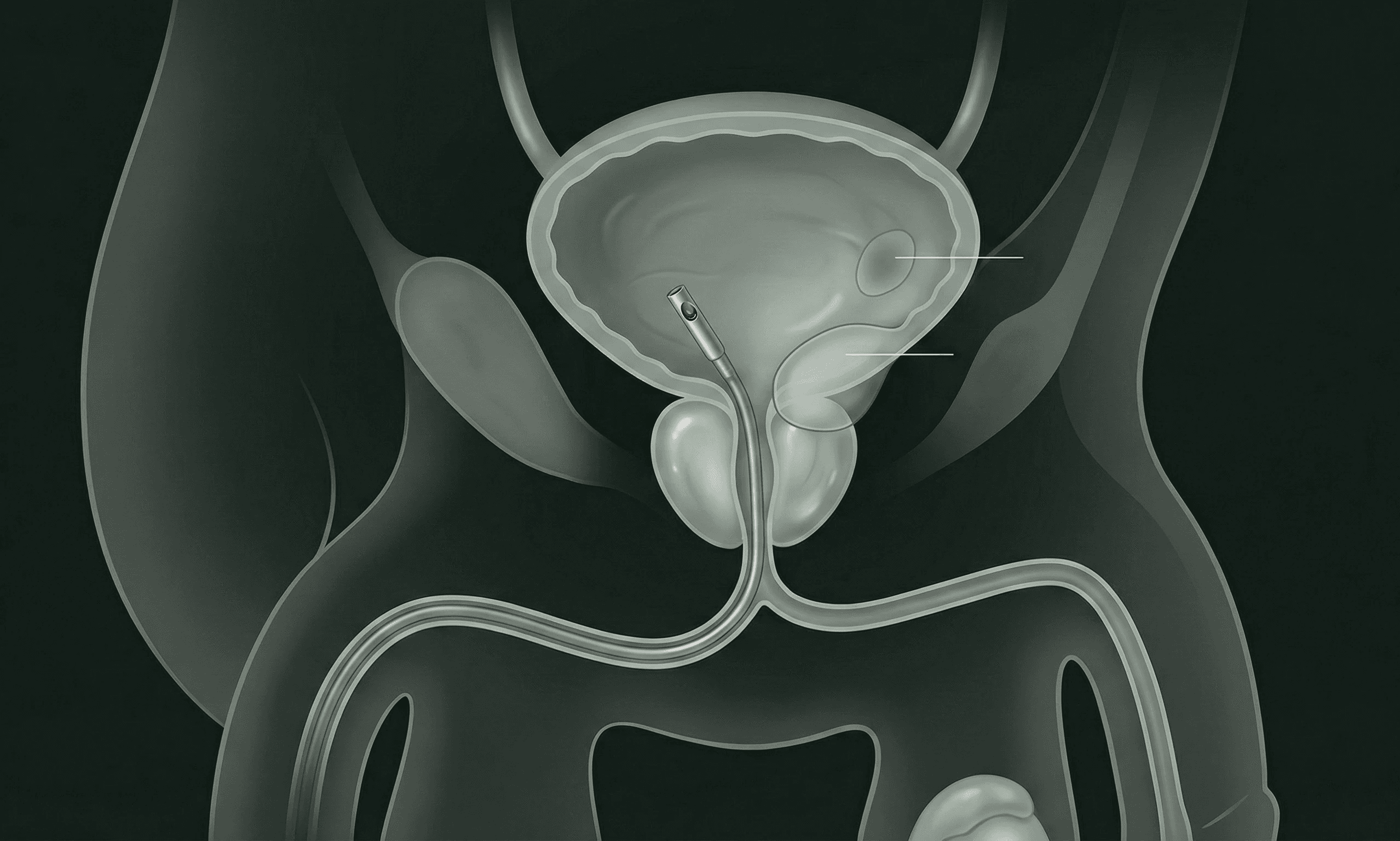
General urology operations include a range of endoscopic and surgical procedures used to diagnose and treat common conditions affecting the prostate, bladder, urethra, penis, and scrotum. Many of these procedures are performed using minimally invasive techniques, often through natural urinary pathways, without the need for large incisions.
What conditions do these procedures treat?
These procedures are used to manage:
Benign (non-cancerous) enlargement of the prostate
Bladder growths and abnormalities
Urethral narrowing or blockage
Ureteric injury requiring internal realignment
Penile and scrotal conditions such as hydrocoele and epididymal cysts
Why are these procedures recommended?
General urology procedures are recommended when symptoms affect urinary function, comfort, or quality of life, or when abnormalities require direct assessment or treatment. Endoscopic approaches allow accurate diagnosis and effective treatment while reducing recovery time and surgical impact.
How are the procedures carried out?
Depending on the condition being treated, procedures may include:
Endoscopic ureteric realignment
Used to restore continuity of the ureter following injury using minimally invasive techniques.
Urethral dilatation and urethrotomy
Performed to treat narrowing of the urethra and improve urinary flow.
Endoscopic bladder procedures
Telescopic procedures to examine the bladder and resect bladder growths where required.
Transurethral Resection of the Prostate (TURP)
A telescopic procedure to relieve urinary obstruction caused by benign prostate enlargement.
Bladder growth resection
Removal of bladder growths using endoscopic instruments.
Penile and scrotal surgery
Including circumcision, hydrocoele repair, and epididymal cyst excision.
Anaesthesia, hospital stay & recovery
Most procedures are performed under general anaesthesia
Many operations are completed as day cases
Some procedures may require a short hospital stay
Recovery varies depending on the specific operation performed
Specialist expertise & advanced techniques
These procedures are undertaken using established endoscopic techniques that prioritise safety, precision, and patient comfort. Minimally invasive approaches help reduce recovery time while achieving effective treatment outcomes.
Follow-up & next steps
Follow-up care depends on the procedure performed and the underlying condition. This may include clinic review, imaging, catheter or stent management where relevant, and ongoing monitoring to ensure optimal recovery and long-term urinary health
We’re Here to Help
Get clear guidance and support from Dr Philip’s team.
Experienced clinical team
Patient-centred approach
Clear next steps
[Clinical PROCEDURES]
Explore More Procedures
Ureteroscopy & Uretero-renoscopy
Minimally invasive telescopic treatment used to diagnose and treat stones, blockages, and abnormalities in the ureter and kidney.
Read More
Percutaneous Nephrolithotomy (PCNL)
A keyhole surgical procedure designed to safely remove large or complex kidney stones.
Read More
Shock Wave Lithotripsy [ESWL]
A non-surgical treatment that uses focused shock waves to break kidney or ureteric stones into smaller fragments.
Read More