Shock Wave Lithotripsy [ESWL]
A non-surgical treatment that uses focused shock waves to break kidney or ureteric stones into smaller fragments.
Shock Wave Lithotripsy [ESWL]
A non-surgical treatment that uses focused shock waves to break kidney or ureteric stones into smaller fragments.
What is this procedure?
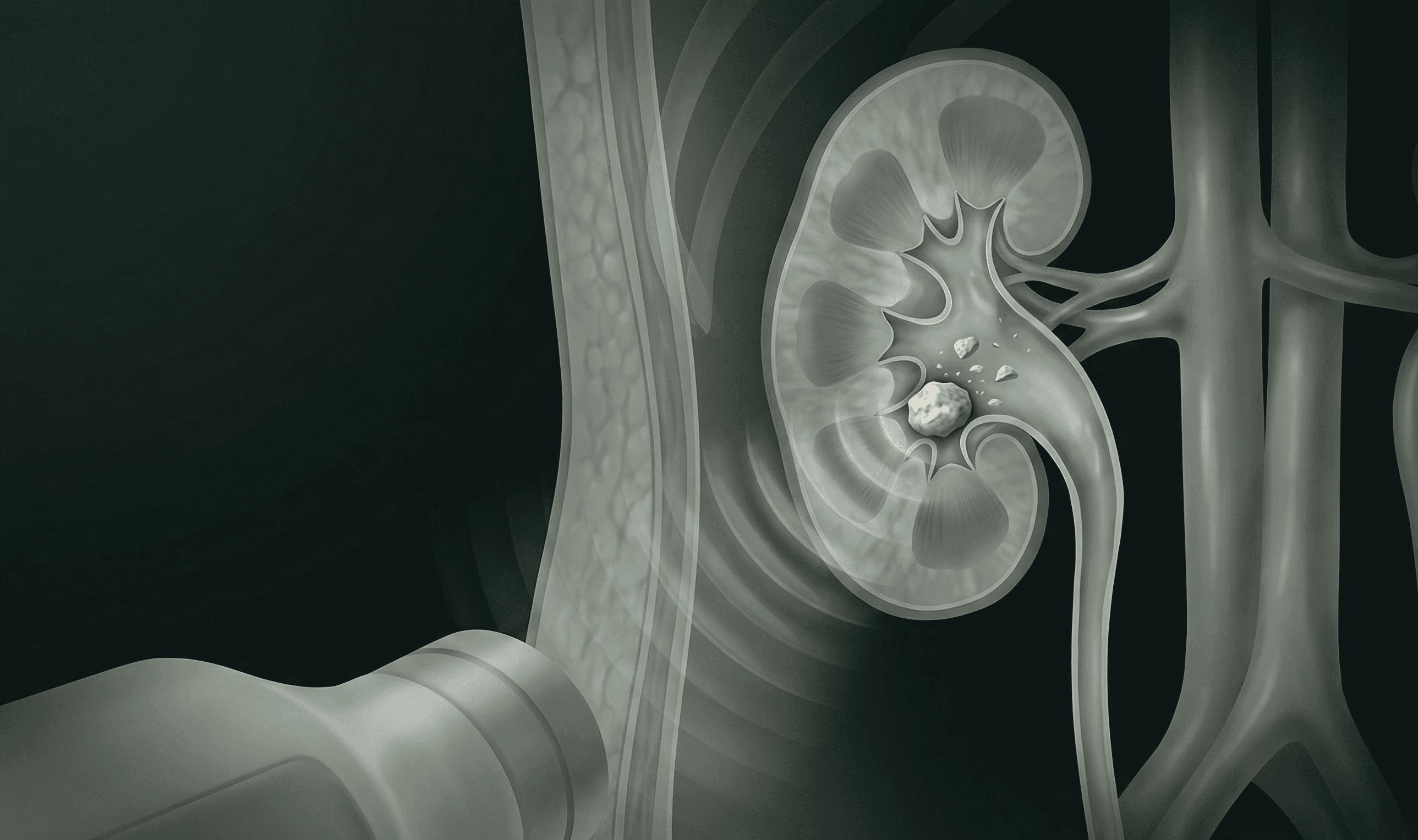
Extracorporeal Shock Wave Lithotripsy (ESWL) is a non-surgical treatment used to break kidney or ureteric stones into smaller fragments. It uses externally generated shock waves that pass through the body and are precisely focused on the stone, allowing it to fragment without the need for incisions or telescopic instruments.
What conditions does this procedure treat?
ESWL is used to treat:
Kidney stones
Ureteric stones
Selected stones that are small to moderate in size and suitably positioned
Why is this procedure recommended?
ESWL may be recommended when stones are suitable for non-invasive treatment and are likely to fragment effectively with shock waves. It offers a treatment option that avoids surgery and can be performed without the need for general anaesthesia in many cases.
Suitability depends on factors such as stone size, location, composition, and individual patient characteristics.
How is the procedure carried out?
Shock waves are generated outside the body and transmitted through soft tissues
Imaging is used to accurately target the stone
Repeated shock waves gradually fragment the stone into smaller pieces
The fragments are then passed naturally in the urine over time
Anaesthesia, hospital stay & recovery
Sensation during treatment varies from mild awareness to discomfort or pain
Most patients experience moderate discomfort
Pain relief is routinely offered, often using anti-inflammatory medication
Some patients may receive stronger pain relief, which can be sedative
ESWL is usually performed as a day-case procedure
Specialist expertise & advanced techniques
A high-volume fixed-site shock wave lithotripter allows consistent and effective delivery of ESWL. Experience in patient selection and treatment planning helps optimise outcomes and minimise the need for repeat procedures.
Follow-up & next steps
Stone fragments may pass over days to weeks following treatment. Follow-up imaging may be arranged to assess stone clearance and determine whether further treatment is required. Ongoing advice is provided to reduce the risk of future stone formation
We’re Here to Help
Get clear guidance and support from Dr Philip’s team.
Experienced clinical team
Patient-centred approach
Clear next steps
[Clinical PROCEDURES]
Explore More Procedures
Ureteroscopy & Uretero-renoscopy
Minimally invasive telescopic treatment used to diagnose and treat stones, blockages, and abnormalities in the ureter and kidney.
Read More
Percutaneous Nephrolithotomy (PCNL)
A keyhole surgical procedure designed to safely remove large or complex kidney stones.
Read More
General Urology Operations
A range of endoscopic and surgical procedures to treat prostate, bladder, urethral, and scrotal conditions.
Read More