Ureteroscopy & Uretero-renoscopy
Minimally invasive telescopic treatment used to diagnose and treat stones, blockages, and abnormalities in the ureter and kidney.
Ureteroscopy & Uretero-renoscopy
Minimally invasive telescopic treatment used to diagnose and treat stones, blockages, and abnormalities in the ureter and kidney.
What is this procedure?
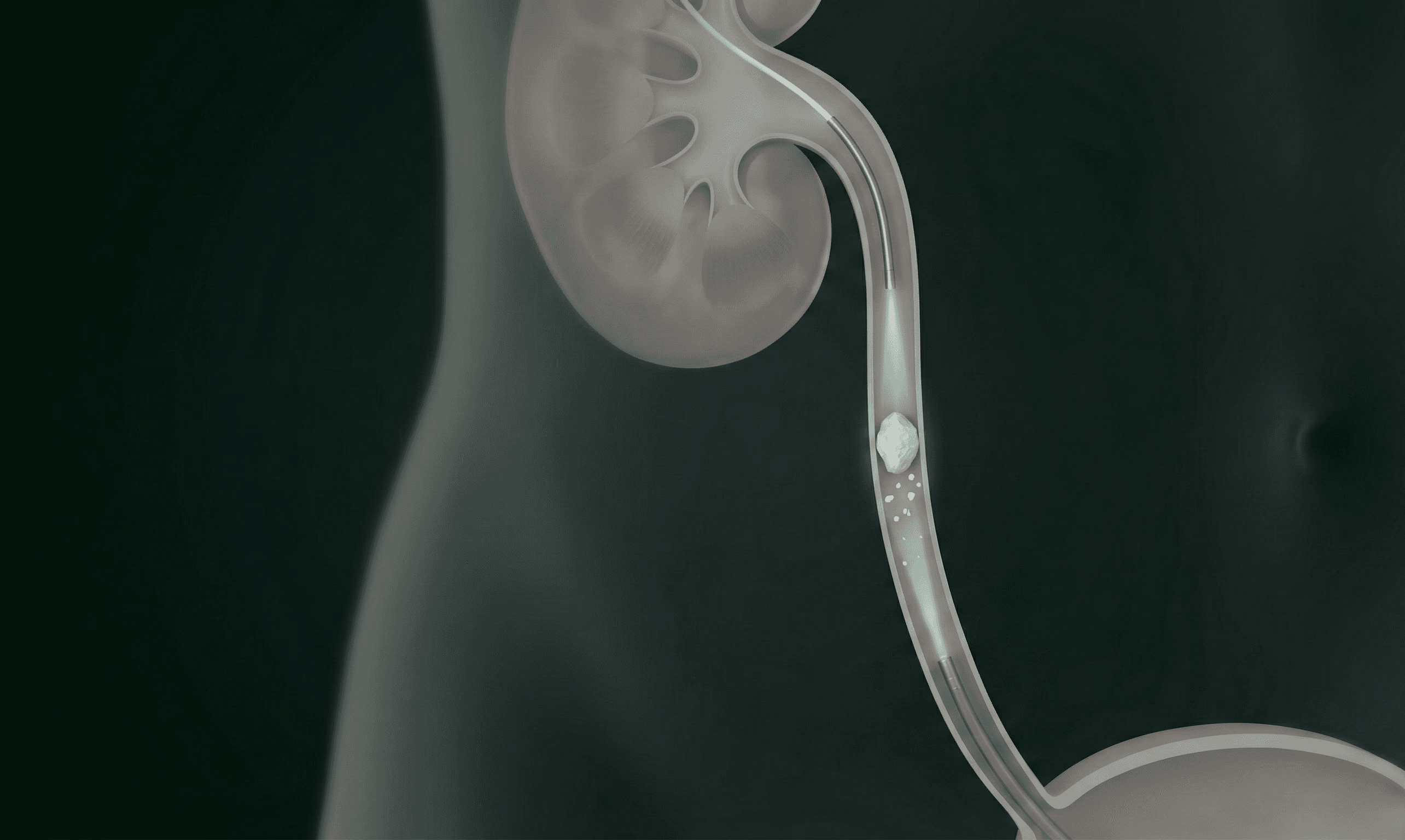
Ureteroscopy and uretero-renoscopy are minimally invasive endoscopic procedures used to examine and treat conditions affecting the ureter and the kidney drainage system. A fine telescope is passed through the natural urinary passage (the urethra and bladder), allowing direct visual access to the upper urinary tract without any skin incisions.
What conditions does this procedure treat?
This procedure is used to manage and investigate:
Kidney stones & Ureteric stones
Abnormalities or tumours in the upper urinary tract
Blockage or narrowing of the ureter
Unexplained blood in the urine
Selected upper tract urothelial tumours (diagnosis and treatment in suitable cases)
Why is this procedure recommended?
Ureteroscopy is recommended when stones or abnormalities cannot pass naturally or when non-invasive treatments are unsuitable or ineffective. It allows precise diagnosis and treatment in a single procedure and is particularly useful when direct visual assessment of the kidney or ureter is required.
The approach may also be used to clarify findings when other investigations have not provided adequate reassurance.
How is the procedure carried out?
The procedure is performed under general anaesthesia.
A semi-rigid or flexible ureteroscope is passed through the bladder into the ureter and kidney
Stones are fragmented using a laser fibre
Stone fragments may be removed using baskets or graspers
Narrowed areas of the ureter or the pelvi-ureteric junction (PUJ) can be dilated or treated with laser
If a tumour is identified, a biopsy may be taken; small tumours may be treated using laser
In some cases, a temporary ureteric stent (JJ stent) is placed to allow swelling to settle and to maintain kidney drainage.
Anaesthesia, hospital stay & recovery
Performed under general anaesthesia
Most procedures are completed as a day case
Temporary symptoms such as urinary frequency, mild discomfort, or blood in the urine may occur
If a JJ stent is inserted, it is usually removed later using a flexible telescope under local anaesthetic
Specialist expertise & advanced techniques
This procedure is frequently used in complex situations, including difficult anatomy, large stone burdens, or urgent presentations. Advanced endoscopic techniques allow effective treatment while minimising the need for more invasive surgery. The procedure also forms a key part of specialist pathways for stone disease and upper urinary tract assessment.
Follow-up & next steps
Follow-up depends on the indication for the procedure. This may include stent removal, imaging to confirm stone clearance, or further treatment planning where required. Patients are guided through recovery and advised on next steps to support long-term urinary tract health.
We’re Here to Help
Get clear guidance and support from Dr Philip’s team.
Experienced clinical team
Patient-centred approach
Clear next steps
[Clinical PROCEDURES]
Explore More Procedures
Percutaneous Nephrolithotomy (PCNL)
A keyhole surgical procedure designed to safely remove large or complex kidney stones.
Read More
Shock Wave Lithotripsy [ESWL]
A non-surgical treatment that uses focused shock waves to break kidney or ureteric stones into smaller fragments.
Read More
General Urology Operations
A range of endoscopic and surgical procedures to treat prostate, bladder, urethral, and scrotal conditions.
Read More